Joanna Kasprzak
Chief Operating Officer
Joanna Kasprzak, Ph.D. in Bioinformatics, has led over 30 of Apzumi's successful Digital Health applications. She is always happy to share both medical and technical insights and advice for your project

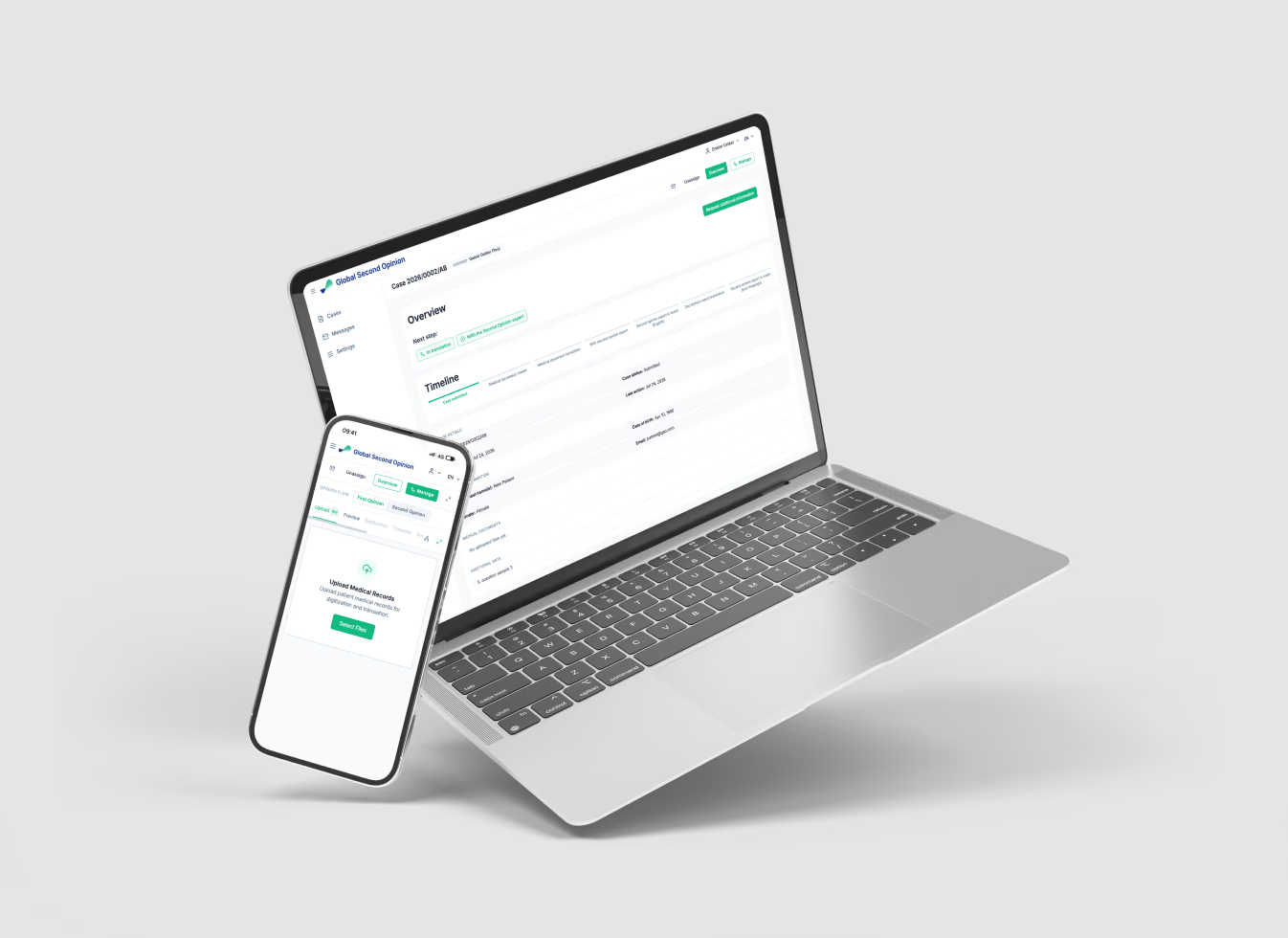
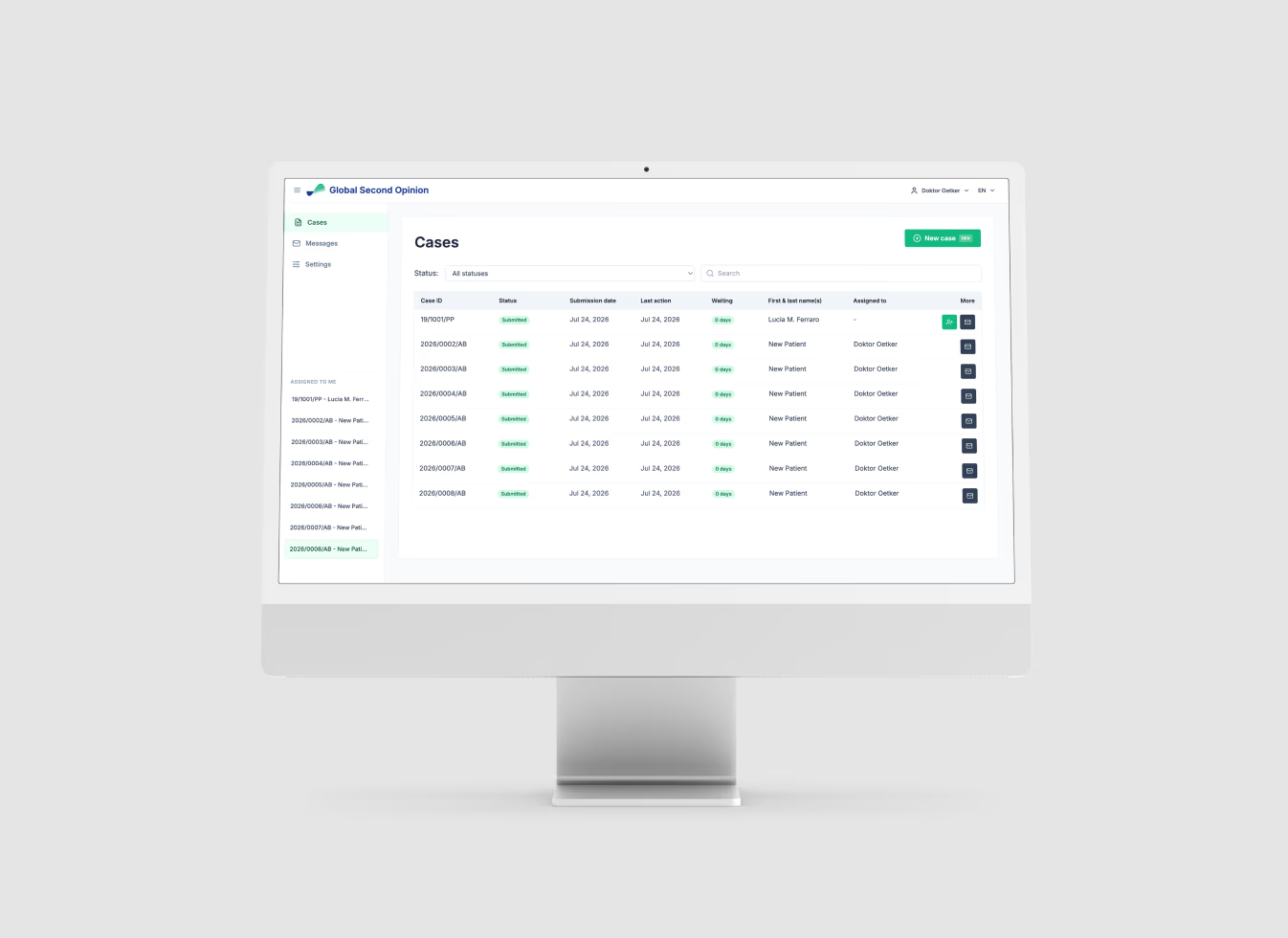
We built AI-powered automation for Global Second Opinion, a digital health platform that connects patients with the world's top hospitals for an expert second opinion on their diagnosis and treatment.
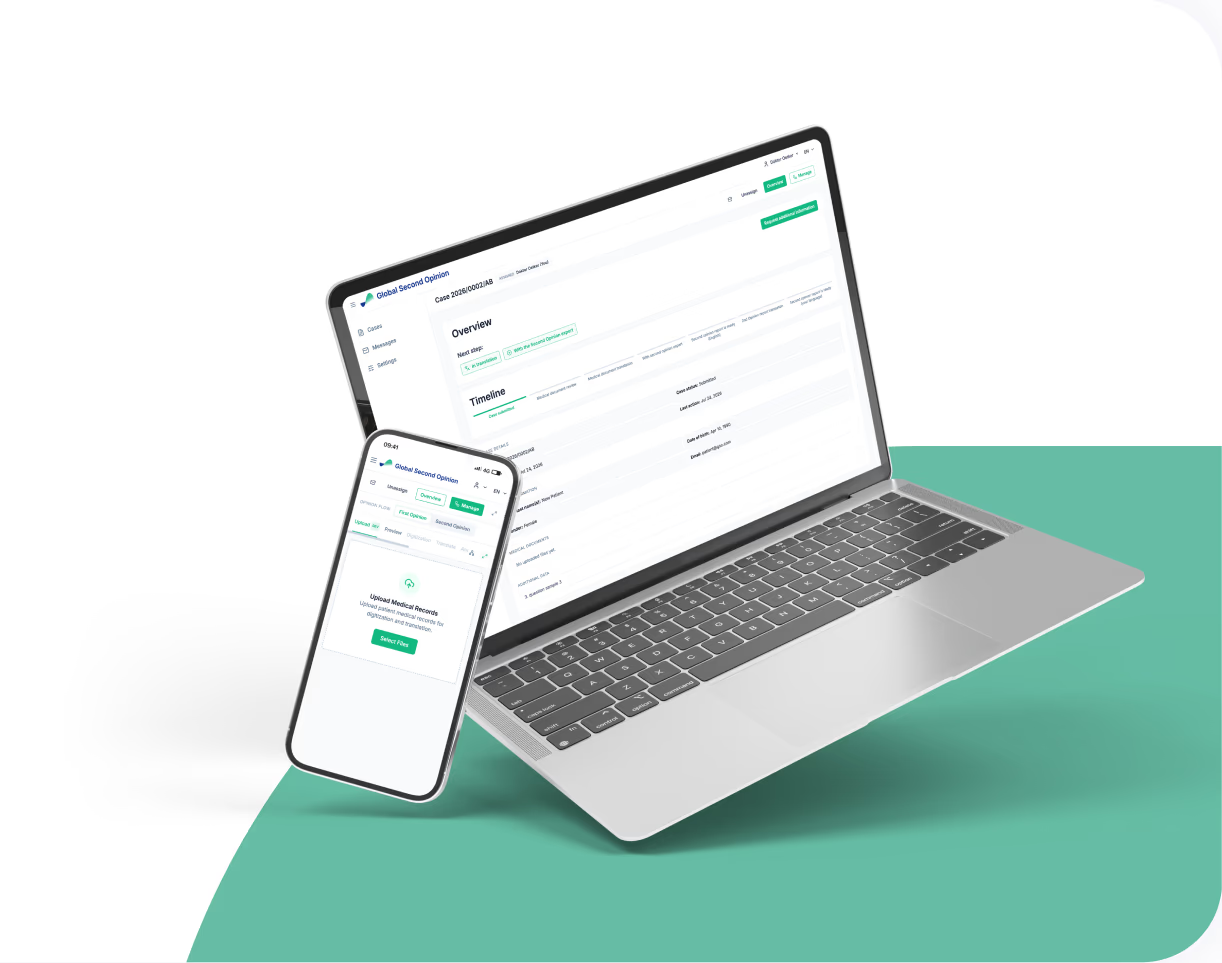
Global Second Opinion is a US-based digital health company on a mission to make world-class medical expertise reachable for any patient. A second opinion can confirm a diagnosis, change a treatment plan, or open options a patient never knew they had. The platform connects these patients with specialists at the world's top academic hospitals, no matter where they live or what language they speak, and gives each of them a dedicated case manager to guide the way.
The company also works with insurers, employers, and hospitals that offer the service to their members, so it has to deliver reliably and at volume. Yet every case begins with a wall of medical documentation - records that arrive from any country, in any format, and in any language, which a specialist elsewhere in the world then has to read, understand, and act on.
Two issues make this difficult. Medical records are among the most sensitive personal data there is, so the service has to be HIPAA- and GDPR-compliant from day one, and any lapse in trust is unacceptable. At the same time, preparing each case and returning a clear answer in the patient's own language is demanding work - and done manually it could hardly scale to the number of patients the platform set out to reach.
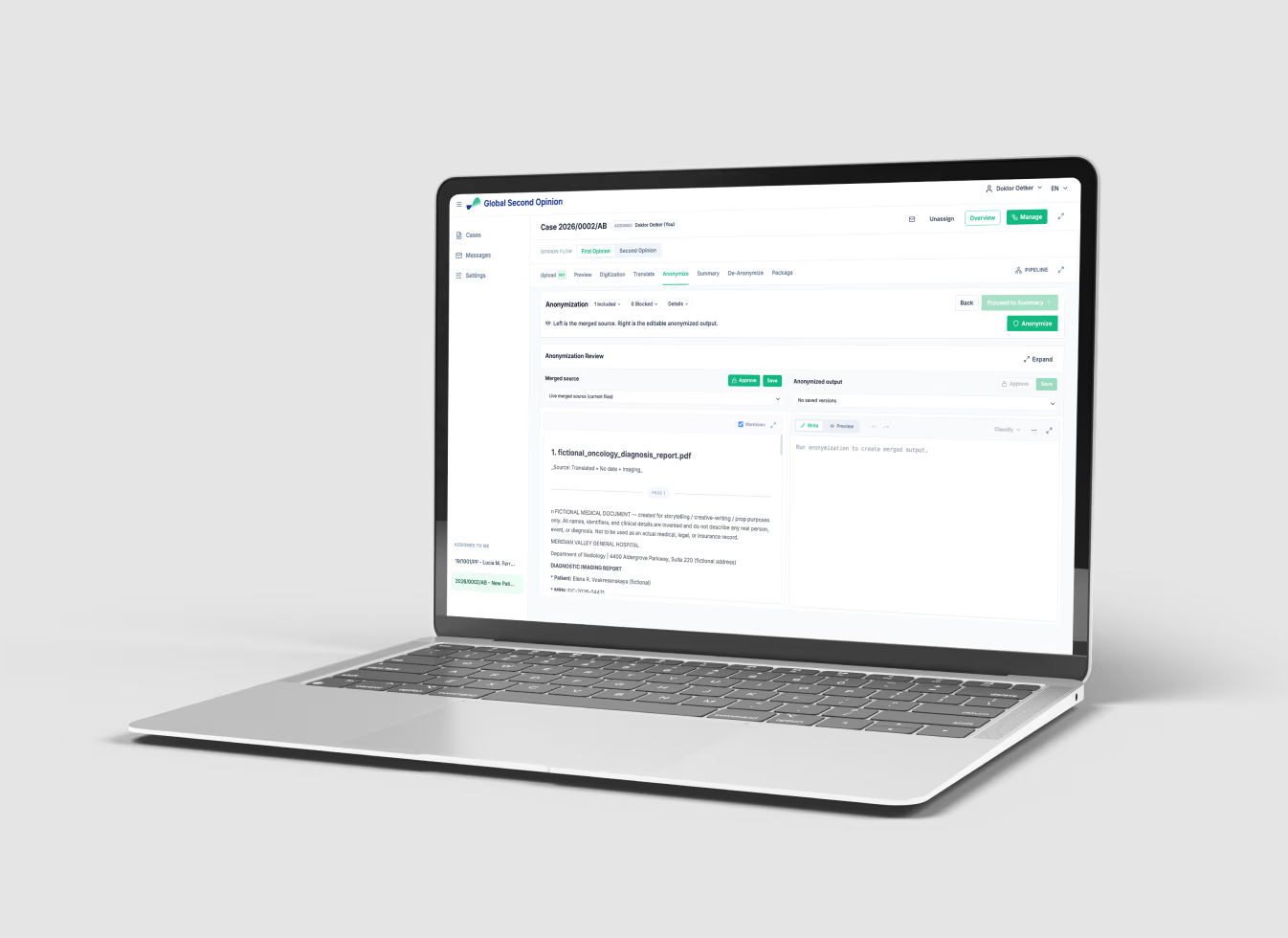
Apzumi built the automation at the core of the platform, and delivered it as two AI pipelines. The first turns a patient's uploaded medical records into a clean, structured file for the reviewing specialist. The second takes the specialist's expert opinion and turns it into a clear, easy-to-read report for the patient, in their own language.
For the AI engine we chose AWS Bedrock with Anthropic's Claude models, and we designed each pipeline as a chain of independent stages that hand work from one to the next. That structure was a deliberate choice: any single stage can be improved or replaced later without touching the rest, so the platform stays easy to evolve as the product grows.
We built the solution around two commitments. The first is data protection at every stage: sensitive patient information is safeguarded throughout, so the platform can use AI without putting privacy at risk. The second is that human judgment stays in charge - a medical case manager reviews and approves the work as it moves forward, so the AI supports the experts rather than replacing them.
The result is one repeatable process that protects sensitive data, keeps doctors in control, and produces both a doctor-ready file and a patient-ready report from the same uploads. Patients reach an expert answer faster, and the client gets a service that scales in two directions: every case runs the same way at a predictable cost, and every report can come back in the patient's language. That is what lets the client take on insurers, employers, and hospitals as customers, who in turn offer the service to their own members across more countries, at volume.



We analyzed the medical data alongside the commercially available models and tools for OCR, translation, and medical-data analysis. We benchmarked and ranked them, then selected the best fit for the project.
We built the AI workflow that processes and analyzes each case's medical data, turning raw records into structured, usable output for specialists and patients. This phase is in progress.
The system is split in two parts. The frontend is an Angular single-page app, served through AWS CloudFront and S3. The backend is a Java 21 Spring Boot API on AWS Elastic Beanstalk, with PostgreSQL for storage and AWS Cognito for login. All AI steps run in a Python toolkit that the backend calls, which in turn uses Anthropic Claude models through AWS Bedrock. A scheduler moves each case through its pipeline steps, and tools pass data to each other through one shared format. A CRM module holds the hospital and doctor profiles used in the reports, and no case moves forward until a case manager approves the current step.









Chief Operating Officer
Joanna Kasprzak, Ph.D. in Bioinformatics, has led over 30 of Apzumi's successful Digital Health applications. She is always happy to share both medical and technical insights and advice for your project

Chief Technology Officer
Sebastian Zarzycki, MSCS in Software Engineering, has over 18 years of experience in designing, architecting, implementing and overseeing software. He's involved in all key Apzumi projects.