Software platform as a certified medical device

Software platform as a certified medical device


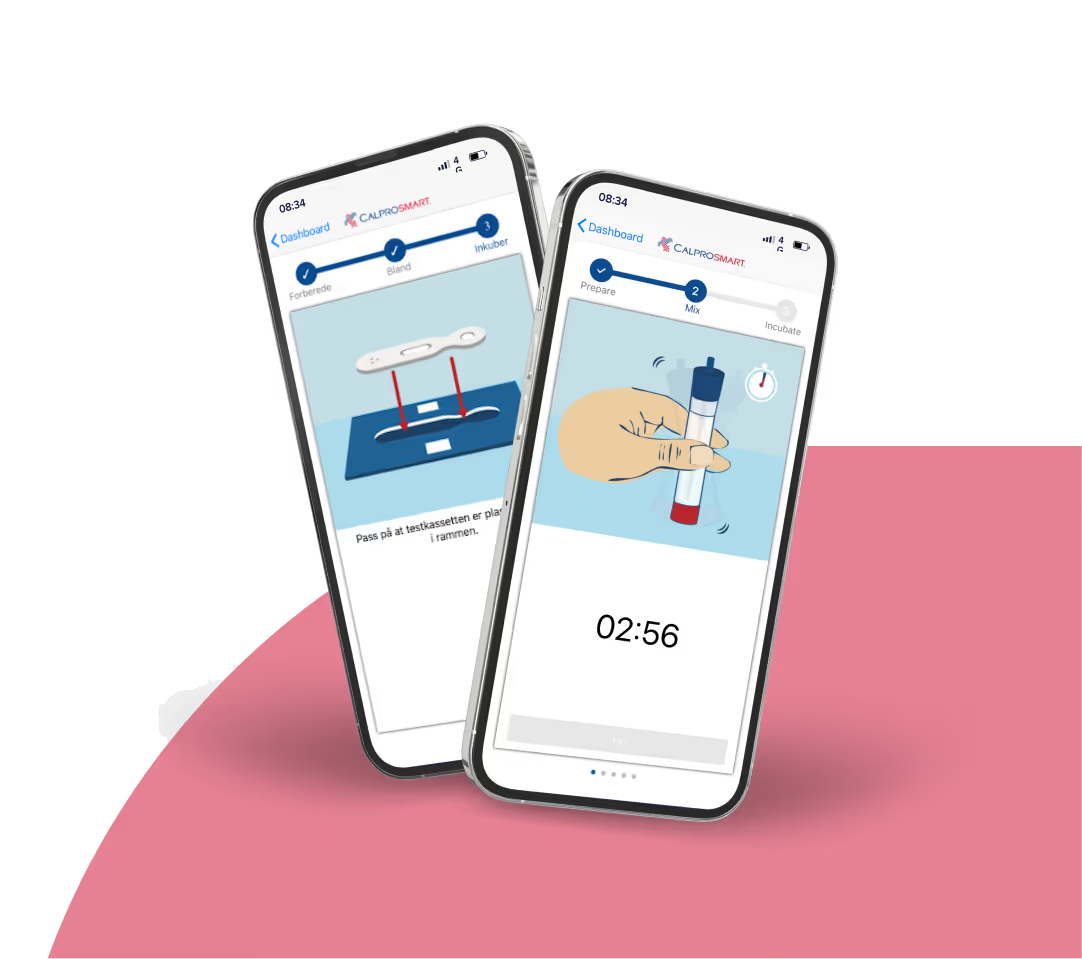
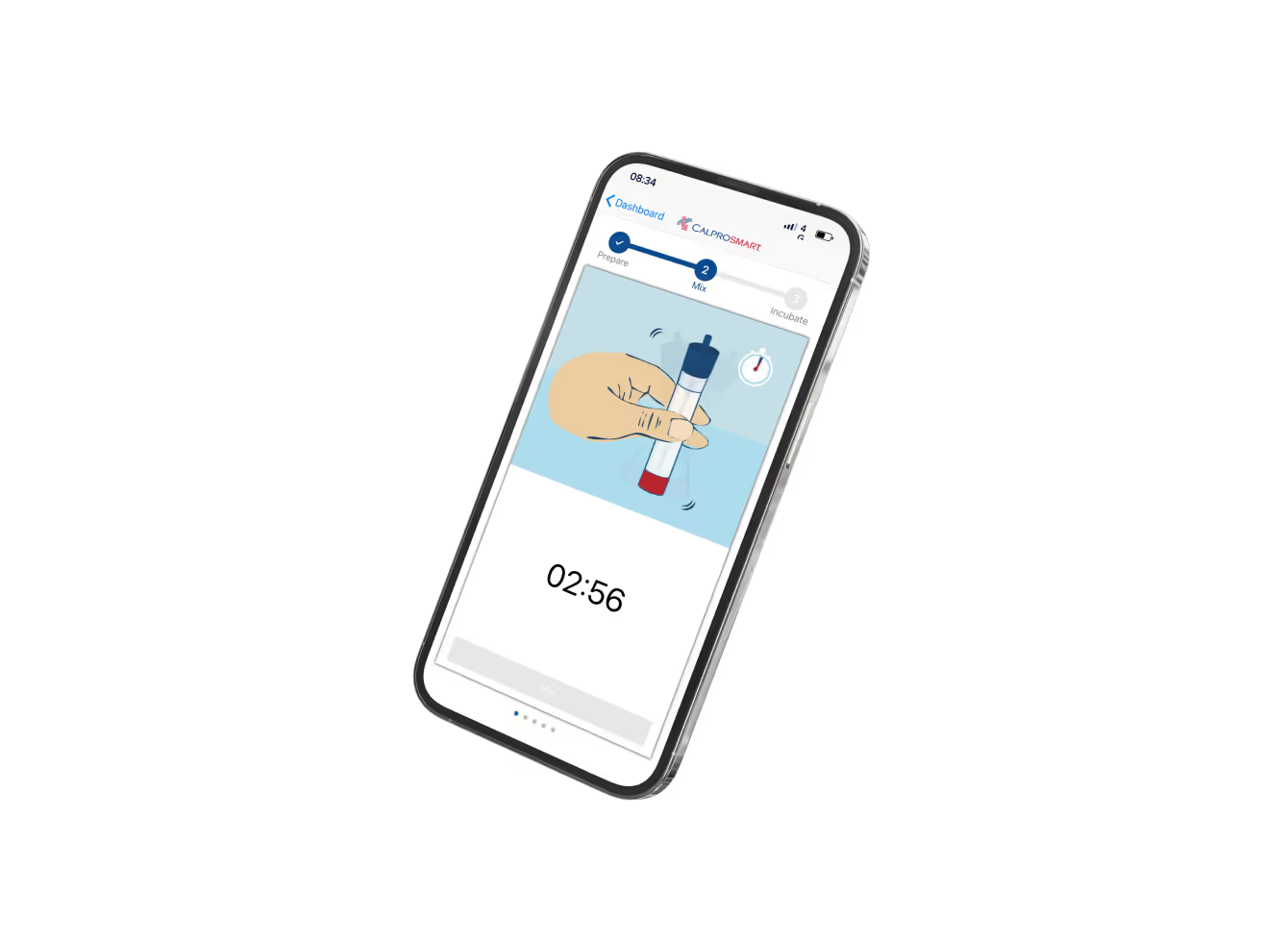
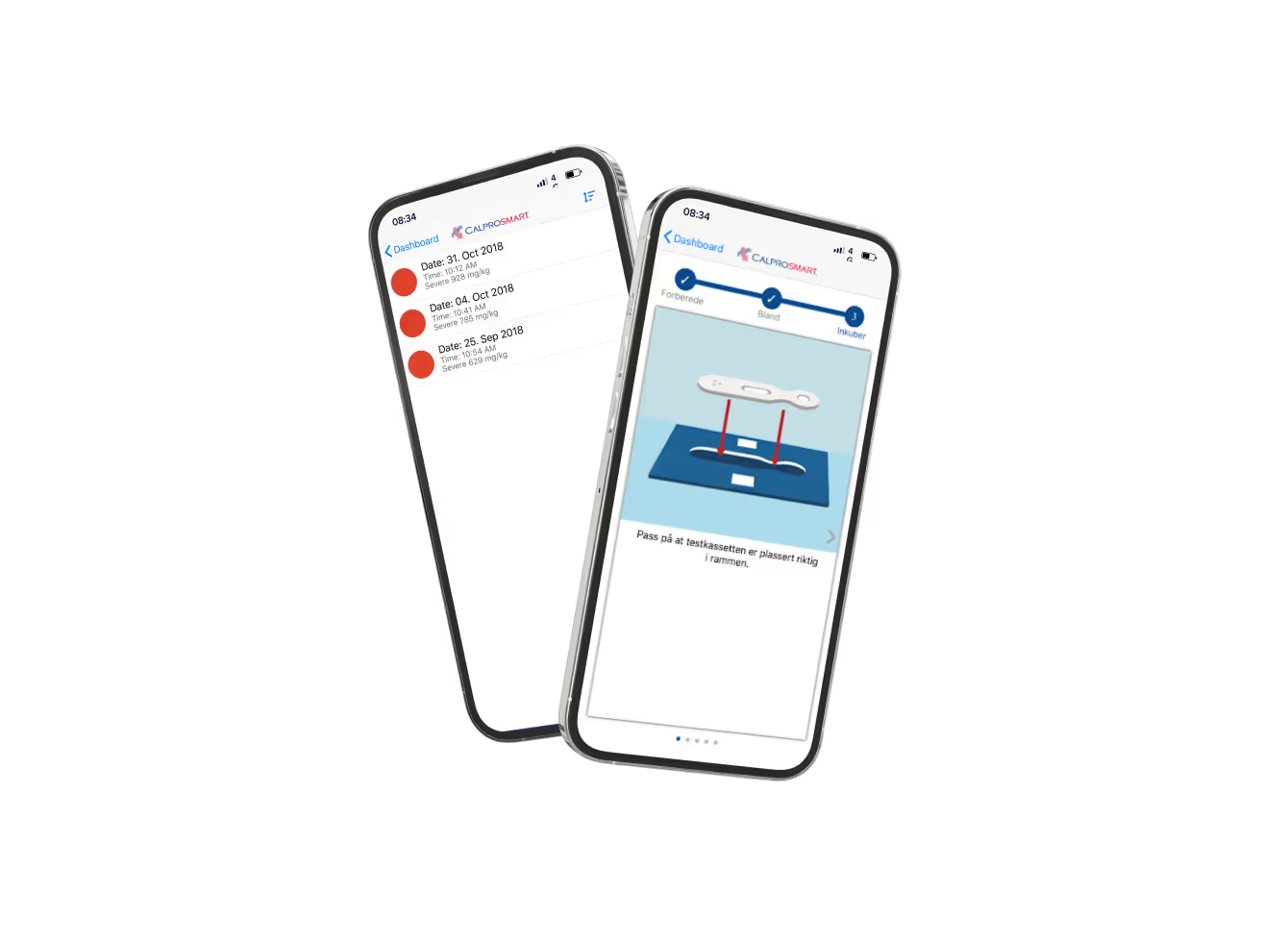
The Calpro project is a digital solution designed to monitor patients suffering from Crohn’s disease, a chronic inflammatory bowel condition. The app is intended to help patients track their health status outside of the hospital by using at-home tests that are similar in appearance to pregnancy tests. These tests measure inflammatory markers from a stool sample to indicate the intensity of inflammation, with results ranging from mild to severe (on a scale of 1 to 3).
Patients use the app to take a photo of their test results, which are then analyzed by an algorithm certified for medical use. This algorithm processes the image and provides the patient with a clear, validated result on their current inflammation level. The data is automatically sent to the hospital, allowing healthcare providers to monitor the patient’s condition and adjust treatment plans, such as scheduling earlier visits if necessary.

The Calpro project addresses several key challenges faced by patients with Crohn's disease:
Self-Service Diagnosis:
Calpro empowers patients by allowing them to monitor their condition independently. Instead of relying solely on hospital visits, users can perform tests at home to assess inflammation levels. The ability to self-diagnose provides them with control over their health and peace of mind between medical appointments.
Improved Patient Experience:
Access to specialists treating Crohn's disease can often be limited, and hospital visits need to be carefully managed. Calpro helps improve patient experience by giving doctors real-time insight into a patient's condition based on test results. This allows healthcare providers to optimize hospital visits, ensuring that appointments are scheduled based on actual medical need, thus minimizing unnecessary hospital trips while ensuring timely intervention when required.


The handover phase began with a review and analysis of the existing codebase, conducted in collaboration with the previous development team. This process involved extensive testing, quality assurance checks, and the identification of any areas that required improvements. Based on these evaluations, recommendations were made to enhance the performance and functionality.
Lorem ipsum dolor sit amet, consectetur adipiscing elit. Suspendisse varius enim in eros elementum tristique. Duis cursus, mi quis viverra ornare, eros dolor interdum nulla, ut commodo diam libero vitae erat. Aenean faucibus nibh et justo cursus id rutrum lorem imperdiet. Nunc ut sem vitae risus tristique posuere.


“Experience in medical Apps is a big advantage of Apzumi for me. The team members are also very helpful with their valuable insight.”


Joanna Kasprzak, Ph.D. in Bioinformatics, is a specialist in data simulations and algorithms. In Apzumi, she has led over 30 successful Digital Health applications as a Project Manager or Product Owner.


Sebastian Zarzycki, MSCS in Software Engineering, has over 18 years of experience in designing, architecting, implementing and overseeing software. He's involved in all key Apzumi projects.
Back to Case Studies


The Calpro project is a digital solution designed to monitor patients suffering from Crohn’s disease, a chronic inflammatory bowel condition. The app is intended to help patients track their health status outside of the hospital by using at-home tests that are similar in appearance to pregnancy tests. These tests measure inflammatory markers from a stool sample to indicate the intensity of inflammation, with results ranging from mild to severe (on a scale of 1 to 3).
Patients use the app to take a photo of their test results, which are then analyzed by an algorithm certified for medical use. This algorithm processes the image and provides the patient with a clear, validated result on their current inflammation level. The data is automatically sent to the hospital, allowing healthcare providers to monitor the patient’s condition and adjust treatment plans, such as scheduling earlier visits if necessary.
The Calpro project addresses several key challenges faced by patients with Crohn's disease:
Self-Service Diagnosis:
Calpro empowers patients by allowing them to monitor their condition independently. Instead of relying solely on hospital visits, users can perform tests at home to assess inflammation levels. The ability to self-diagnose provides them with control over their health and peace of mind between medical appointments.
Improved Patient Experience:
Access to specialists treating Crohn's disease can often be limited, and hospital visits need to be carefully managed. Calpro helps improve patient experience by giving doctors real-time insight into a patient's condition based on test results. This allows healthcare providers to optimize hospital visits, ensuring that appointments are scheduled based on actual medical need, thus minimizing unnecessary hospital trips while ensuring timely intervention when required.

The first step involved converting scanned documents into digital formats using OCR technology. This phase was crucial due to the diverse nature and quality of the scanned documents. Advanced OCR solutions were employed, capable of handling various text formats, handwriting, and even low-quality scans, ensuring high accuracy in digitization.
Once digitized, the documents were categorized into predefined classes such as medical reports, lab tests, and billing documents. This categorization was facilitated by a machine learning model trained on a large dataset of annotated healthcare documents. The model was fine-tuned to recognize and categorize documents accurately, even when the formats and templates varied significantly.
The extraction of key facts from the categorized documents was the next critical step. Using natural language processing (NLP) and machine learning algorithms, the system identified and extracted pertinent information such as patient names, birthdates, addresses, ICD codes, and details of medical procedures. The AI model was trained to understand the context and semantics of the healthcare domain, ensuring a high level of precision in fact retrieval.
The final step involved synthesizing the extracted information into coherent medical summaries and reports. Generative AI models, trained on a vast corpus of medical texts, were employed to generate summaries that were both accurate and easily comprehensible. These summaries provided a consolidated view of the patient's medical history and current claims, significantly aiding in the decision-making process.


The handover phase began with a review and analysis of the existing codebase, conducted in collaboration with the previous development team. This process involved extensive testing, quality assurance checks, and the identification of any areas that required improvements. Based on these evaluations, recommendations were made to enhance the performance and functionality.
In this phase, we optimized requirements management and project workflow by structuring processes in Jira and Confluence, where documentation and tasks are linked to tickets. A custom workflow was implemented, providing the client full visibility into task progression—from requirement definition to estimation, approval, implementation, testing, and release.
In the project maintenance phase of Calpro, we are focused on enhancing the application by releasing new features and improving existing ones. We are working on significant optimizations that will further improve performance and user experience, and we look forward to showcasing these updates in the near future.
The Calpro project consists of two native mobile applications, one for Android and one for iOS, designed to read and accurately interpret home test results for patients with Crohn’s disease. These apps utilize native libraries such as OpenCV to process and analyze images captured from test kits, ensuring precise interpretation of the inflammation levels indicated by the test results.
From a technical perspective, Java and React are used for various system components due to their reliability and mainstream adoption, which ensures secure data management and high performance. These technologies were selected to meet the stringent security standards required for handling sensitive patient information, ensuring that the system complies with healthcare industry regulations. The overall infrastructure is designed to guarantee the safety and privacy of the data transmitted between patients and hospitals, providing a robust and secure platform for both users and healthcare providers.