culture
We Launched Health Challenge 4.0

Paweł Kozera
Core Insights
At Apzumi, Health Challenge is our way of putting our own mission to the test: if we build software that helps people take care of their health, we'd better be doing the same for each other. This year's edition, the fourth, runs entirely through a custom Slack app built by our Product Manager, Asia Labijak. The basics carry over from last year, activity points and streak bonuses, but we've added a new twist: points for bringing a colleague along. Solo points still earn merch, but this time our collective score unlocks something bigger for everyone, a team retreat with go-karts. The final tally lands in September.
Introduction
Picture a normal Tuesday. You finish a run, open Slack, and type one line: /hc run 5km. A few seconds later, one of our robot mascots pops up in the thread, mid-sprint of its own, with a line that's somehow both cheesy and exactly what you needed to read. That's Health Challenge in a nutshell this year, and it's a small window into something we actually care about.
We build software for a living that's supposed to help people take better care of their health. It felt only fair to ask the same of ourselves: are we practicing what we preach, or is this the kind of thing that sounds good on a slide and falls apart by week three?
Four editions in, we're still asking that question, and Health Challenge keeps being how we answer it.
Four Editions In
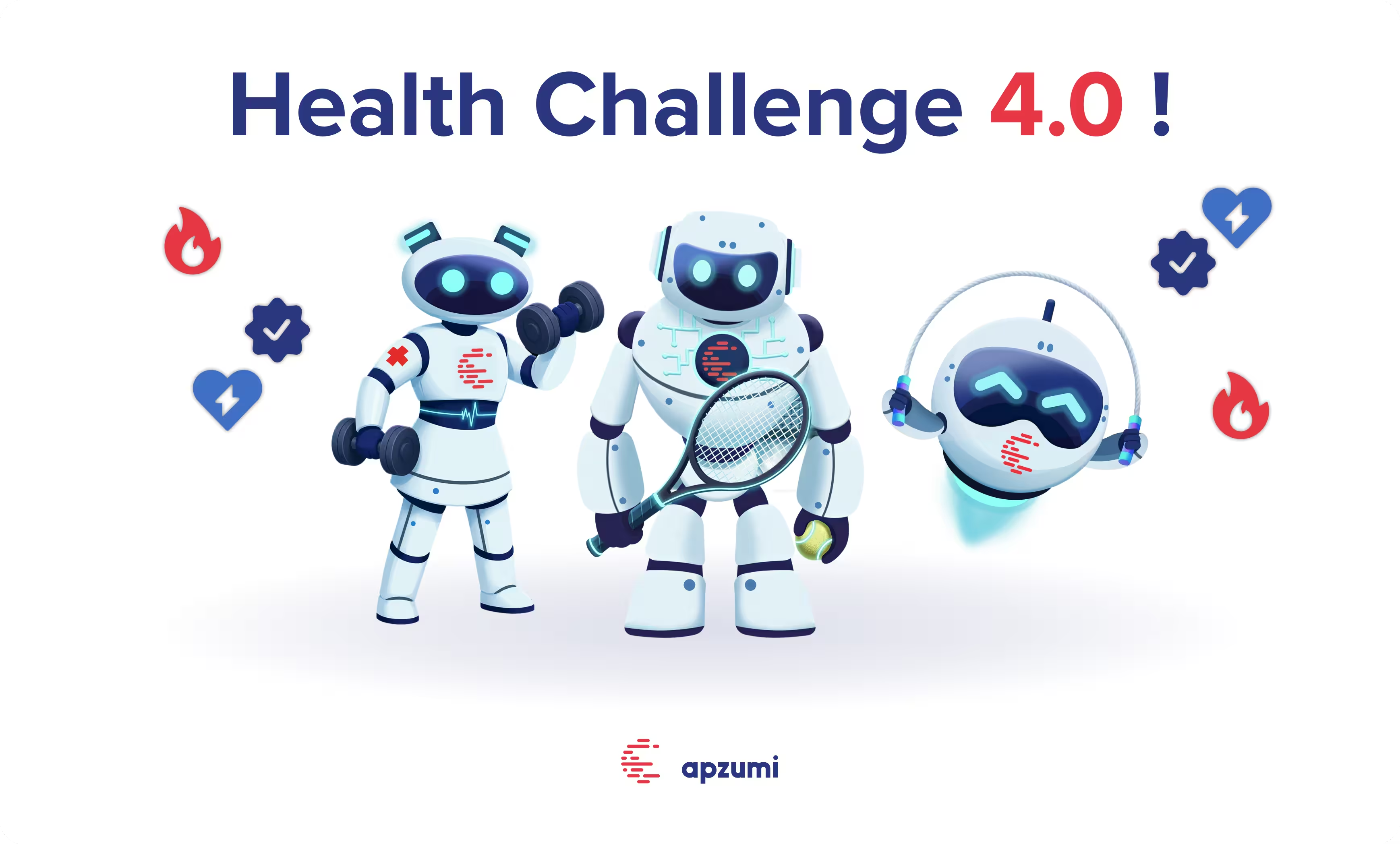
Health Challenge has never looked the same two years in a row. We've changed the tools, the point systems, even how we build motivation into it, more times than we can count. The one thing that's never moved is the point of the whole thing: give people at Apzumi a real reason to look after themselves, whether that's a run, a bouldering session, or just getting outside consistently.
This year's edition runs from June through the end of September, same as always. What's different each time is how we get there. This time it's a Slack app, last time it was something else entirely, but the finish line and the reason for running toward it haven't changed. We'll know how it went, who showed up, who kept a streak alive, who talked a friend into joining, once September closes it out.
What's New: A Slack App Built From Last Year's Lessons
The biggest change this year is where the whole thing lives. Our Product Manager, Asia Labijak, built a custom app that runs right inside Slack, the place we're all already hanging out for stand-ups, memes, and everything in between. No separate platform to remember, no new login gathering dust after week one. Logging a workout, a walk, a kayaking trip, or a five-a-side game is one line typed into a channel you already have open.
It's a small design choice with a big payoff. We're used to tools that meet us where we are, and asking people to open yet another app for something as personal as their health was always going to lose. Building it into Slack means the challenge is right there, in the same place as the rest of the day.
How the Points Work
The basics are the same as last year: log an activity, earn a point. What's sticking around, and getting a bit more emphasis this time, is the streak bonus, extra points for logging activity on consecutive days. That mechanic showed up for the first time last year because we believe taking care of yourself works better as a habit than a one-off, and it worked well enough that we brought it back.
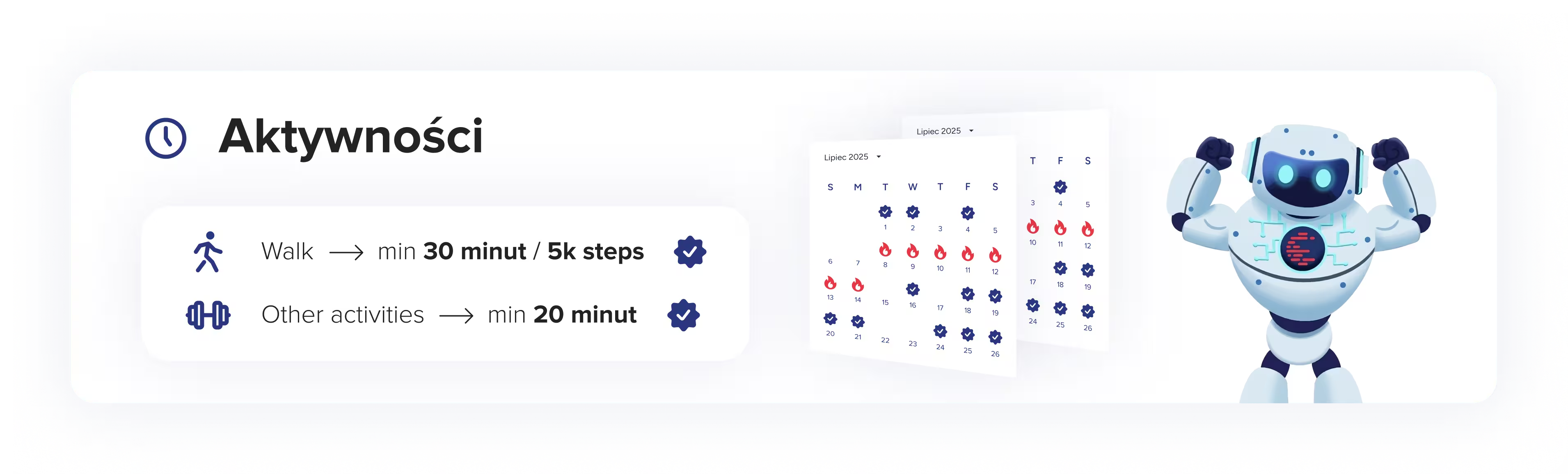
What's actually new this year is a point for pulling someone else in. Get a colleague to join the challenge, and you both walk away with something for it. Suddenly Health Challenge isn't just something you do next to your team, it's something you're actively recruiting them into.
The rewards split two ways. Your own points still earn you Apzumi merch, same as always, exchanged once the challenge wraps at the end of September. We've been running that part of it for all four editions now, and this year there's a fresh batch of items in the mix, so even people who've collected the whole set before will find something new to go after. But everyone's points also stack together into one company-wide total, and hitting a group milestone unlocks something bigger for all of us, this year, an extra team retreat built around go-karts. Your five-a-side game on a Tuesday night isn't just for you anymore, it's chipping in toward something the whole team gets to enjoy.
The Robots Show Up to Cheer
Every time you log an activity, the app sends back more than a checkmark. You get a motivational, slightly ridiculous, sports-flavored quote, something like "You're racking up points faster than VAR reviews an offside call," paired with a graphic of one of our three robot mascots, Ap, Zu, or Mi, out doing an activity of its own. Which robot shows up, and what they're doing, is random, so you might log a five-a-side game and get Zu deep in a kayak, or a quiet walk and get Ap mid-bouldering. Nobody's matching the graphic to what you actually did, and that's part of the fun.
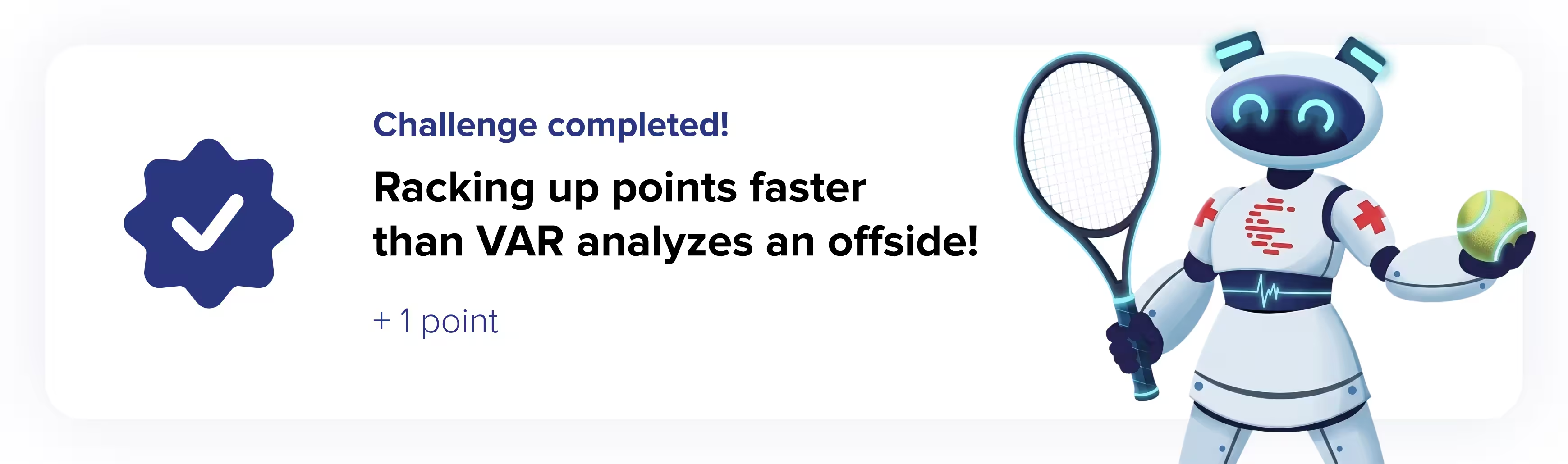
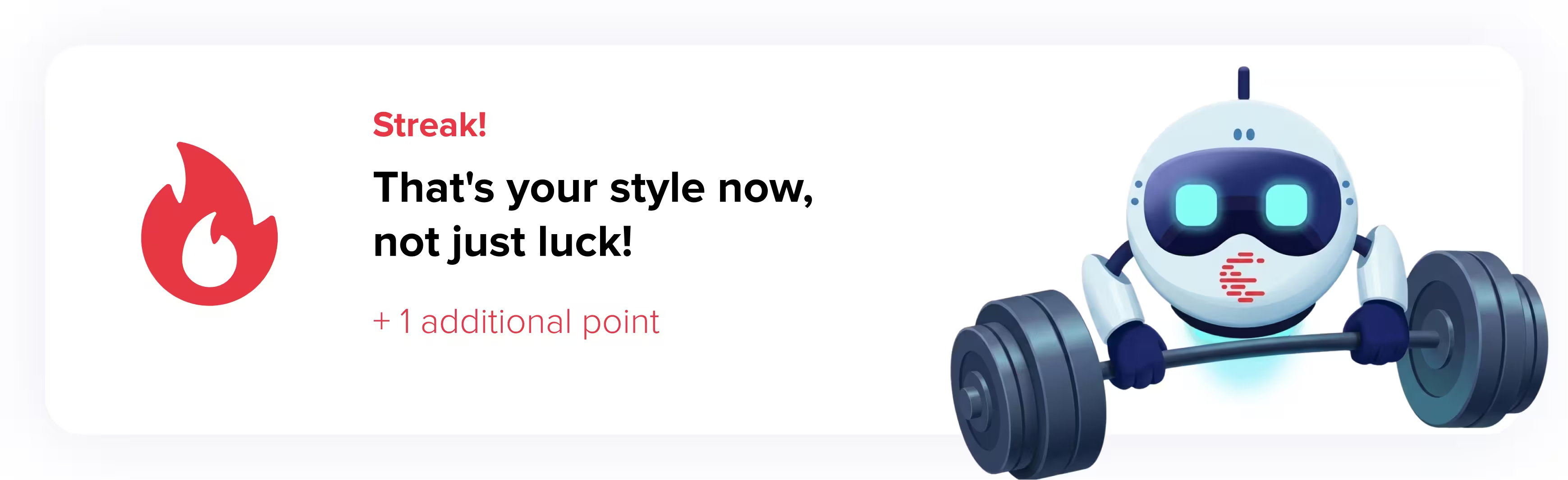
It's a tiny detail in the grand scheme of a health program, but it lands. Watching Ap, Zu, or Mi turn up doing something ridiculous after a run is a genuine little mood boost, and it's a nice reminder that the characters we already use everywhere else at Apzumi have a life outside a logo.
What Happens Next
We won't know the real story, how many people joined, how long the longest streak ran, how many friends got talked into logging their first activity, until the challenge wraps at the end of September. That's on purpose. Four months is enough time to see whether people actually kept the habit going, not just whether they showed up once for the merch.
Summary
It would be easy to run the same wellness perk every year and call it done. We've done the opposite: rebuilt it, tuned it, and moved it into the place we already spend our day, four years running. For a company that spends its working hours building software meant to help other people take care of themselves, that's not a small thing. The go-karts and the robot graphics are fun, and we're not pretending otherwise, but the habit underneath them is what actually matters.
Paweł Kozera
Marketing Specialist
Explore more
Let's stay in touch!